A wood privacy fence works best when it solves a specific problem. Perhaps a neighboring patio overlooks your seating area, or the yard feels exposed from the street. Those situations call for different layouts. Before choosing boards or requesting a price, identify the views you want to interrupt and the parts of the property you want to keep open. That decision gives every later choice a purpose, from the fence style to the position of the last post.
Find the views that actually need screening
Walk outside and stand where you spend time, not just along the property edge. Look outward from your dining table, garden bench and back door. Then consider what someone can see from neighboring ground or the sidewalk. Changes in elevation matter: a fence that screens a seated person may not interrupt a view from higher ground. Explain those sightlines during the consultation instead of asking for privacy as though it means the same thing everywhere.
You may need screening along only one boundary. Leaving another side open can preserve a pleasant view and reduce the amount of fence to maintain. Sketch the yard with windows, seating, planting beds and existing structures marked. A rough drawing is useful even without precise measurements because it makes the purpose of each proposed section clear.
Choose solid privacy or shadowbox deliberately
Solid privacy fencing reduces direct views through the board arrangement. Shadowbox places boards on alternating sides of the supporting rails, creating a different balance of screening, air and light. The important distinction is how the fence looks from an angle. Do not judge shadowbox from a photograph taken straight ahead and assume it will hide everything from a neighboring walkway.
Ask to compare examples from both sides and several viewing angles. Think about where people move as well as where they stand. If the goal is screening a patio immediately beside a busy path, discuss that exact relationship. If the goal is a softer boundary around a large backyard, shadowbox may offer the visual separation you want without the appearance of a continuous solid wall.
Neither style should be selected simply because its name sounds more private. Board arrangement, fence position and surrounding elevations work together. Review the proposed design on your own site, including which side shows the rails and how the ends meet existing structures.
Treat wood appearance and care as connected choices
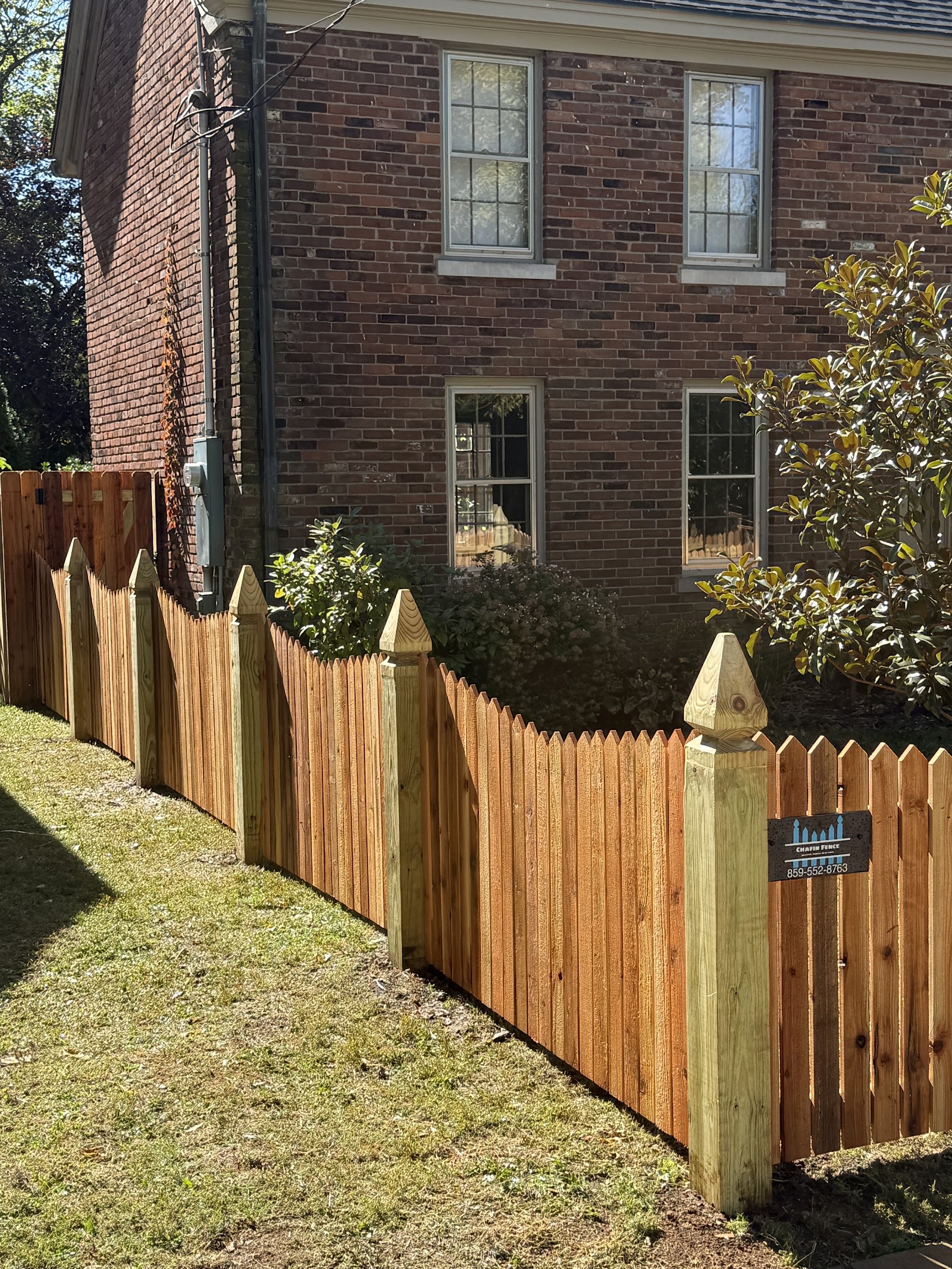
Wood brings a natural appearance, including differences between individual boards. Ask which wood options are available for your project and what appearance to expect when they are installed. A reference image can establish a direction, but it cannot promise that every board will share the same grain or color. Discuss the actual proposed material rather than relying on a general label such as premium.
The care plan deserves the same attention as the initial appearance. Exposure, shade and nearby vegetation affect how a fence weathers. Ask for care guidance for the selected wood and clarify whether staining or sealing is included in the installation proposal. If finishing will happen separately, establish who is responsible and what preparation or timing the chosen products require.
Leave reasonable access for future upkeep. A narrow strip trapped between dense shrubs and fence boards can be awkward to reach. Consider mature planting size, not only the size of plants on installation day. Keeping maintenance practical is part of choosing wood responsibly, rather than a task to think about after construction.
Fit the fence to the ground and boundary
An existing fence is a useful clue about past use, not proof of the legal property line. Review your survey and resolve boundary uncertainty through appropriate advice before agreeing to the route. Also check applicable neighborhood restrictions and local requirements for placement, height and appearance. A fence visible on another street does not establish what is allowed at your address.
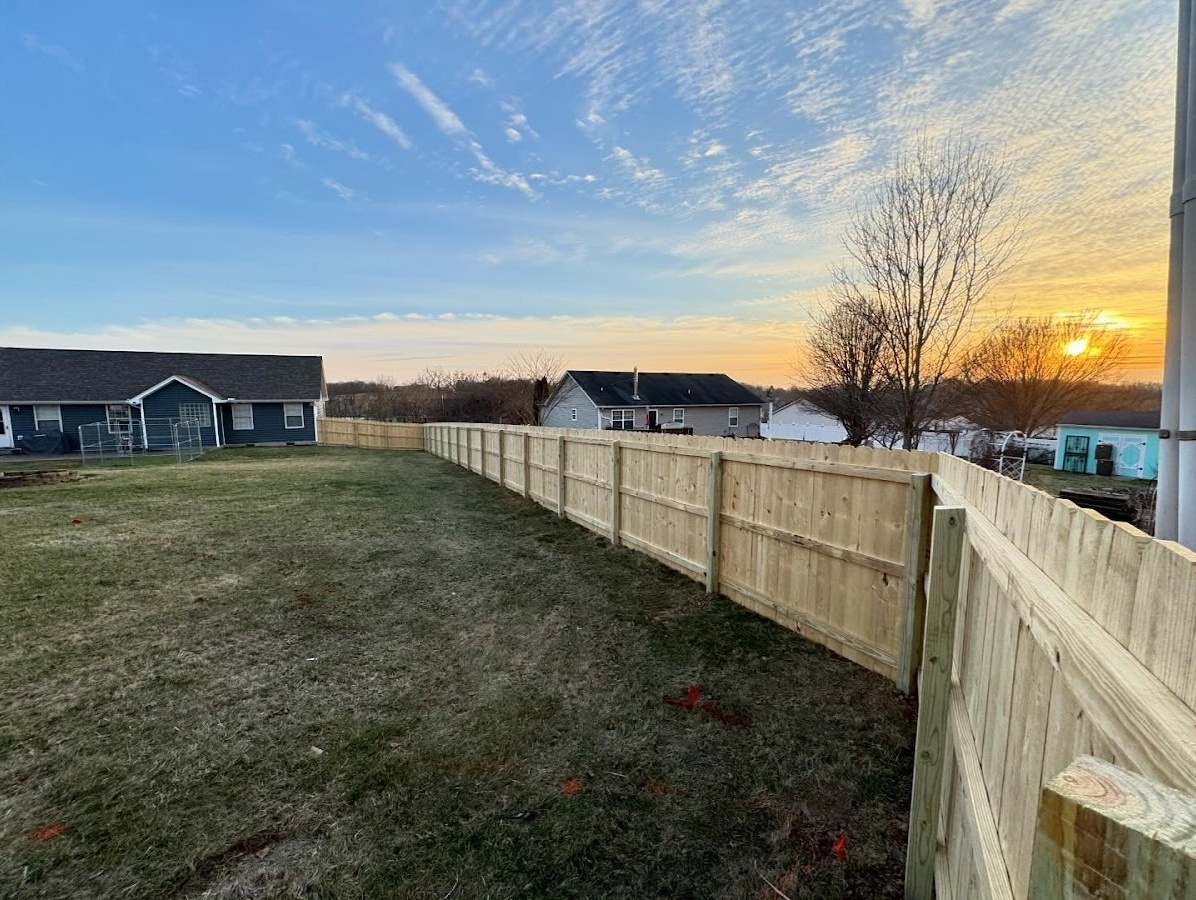
Walk slopes with the installer and ask how the proposed sections will follow changing ground. Discuss the resulting appearance at the top and bottom, particularly where pets use the yard. Privacy at eye level and enclosure near the ground are separate questions. Avoid assuming that a taller design automatically addresses either issue or is permitted.
Point out drainage routes, trees and places where water collects. Discuss utility location before digging and identify any private underground features you know about. These details can influence the route and construction plan. Resolving them early is more useful than choosing a panel arrangement that later has to change around an overlooked obstacle.
Keep useful access inside the privacy plan
A continuous screen still needs sensible openings. Trace the trip from the driveway to the back door and the route used to bring bins, bicycles or mowing equipment into the yard. Measure the largest item that must pass through. The opening needed for equipment may differ from the convenient location for a daily pedestrian gate.
Ask how gate placement affects the surrounding fence and where the leaf will swing. Planting, rising ground and parked vehicles can interfere with movement. A gate also interrupts the visual screen, so consider what becomes visible when it is open. Review gate installation options while the fence layout is still flexible rather than adding an opening as an afterthought.
Understand what changes wood fence installation cost
A useful wood fence installation estimate explains the work rather than offering an unexplained total. Length matters, but so do the selected wood, board arrangement, height, number of corners and gate requirements. Removal of an existing fence, disposal, difficult access and conditions around old supports can change the scope. Ask which of these items the proposal includes.
When comparing quotes, use the same drawing and requirements. A proposal with one simple gate is not directly comparable to another with multiple equipment openings and removal work. Identify essentials first, then ask how optional design choices affect the total. This gives you meaningful ways to adjust the project without assuming the least expensive figure describes equivalent work.
Decide whether replacement is the right scope
If you already have a wood fence, describe the problems before requesting complete replacement. Loose boards, leaning sections and a dragging gate can involve different components. An inspection can establish whether existing supports or sections are suitable to retain. Ask what would remain, what would be removed and how retained portions would meet the new work. A repair discussion and a replacement proposal should not be confused.
Consider how the new fence will connect to boundaries that are staying. An abrupt change in height or board pattern can be more noticeable than expected, especially beside a patio. Show the installer any neighboring sections you do not own and explain whether a connection has been discussed. Also decide what happens at the house wall, shed or other endpoint. Those small transitions affect both appearance and usable space. Having them shown on the layout helps you evaluate the whole enclosure instead of concentrating only on the longest, most visible run of new boards. These details deserve deliberate choices.
Bring a focused brief to the consultation
Gather your sketch, useful property photos, relevant property documents and a short list of priorities. For wood fence installation in Lexington, explain where privacy matters most and what maintenance you are prepared to undertake. Use the contact page to find direct contact details and discuss the property. Before approving work, confirm the layout, material, gates and finishing responsibilities in writing. The strongest choice is the fence whose design, access and care requirements fit how you actually use the yard.